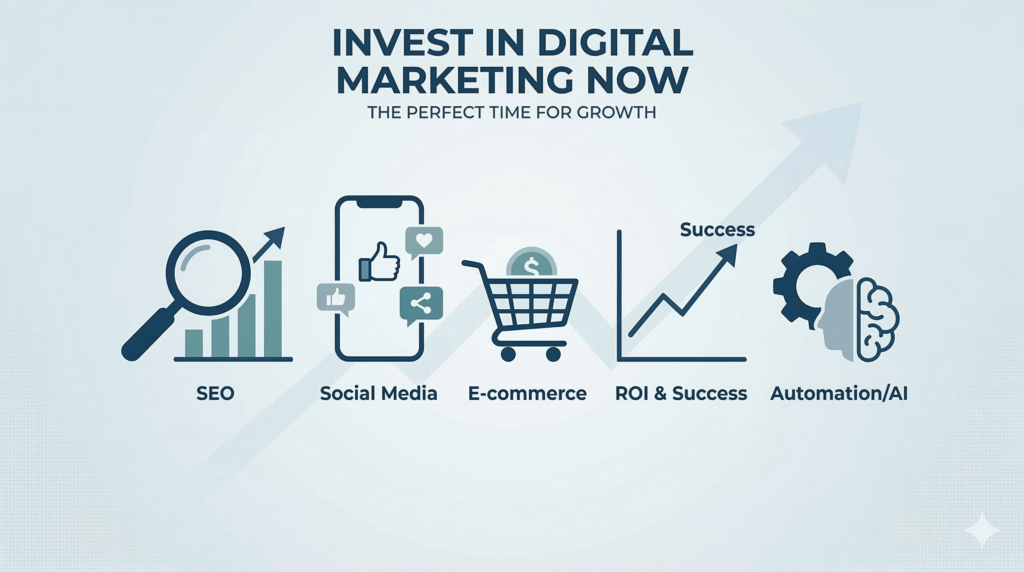
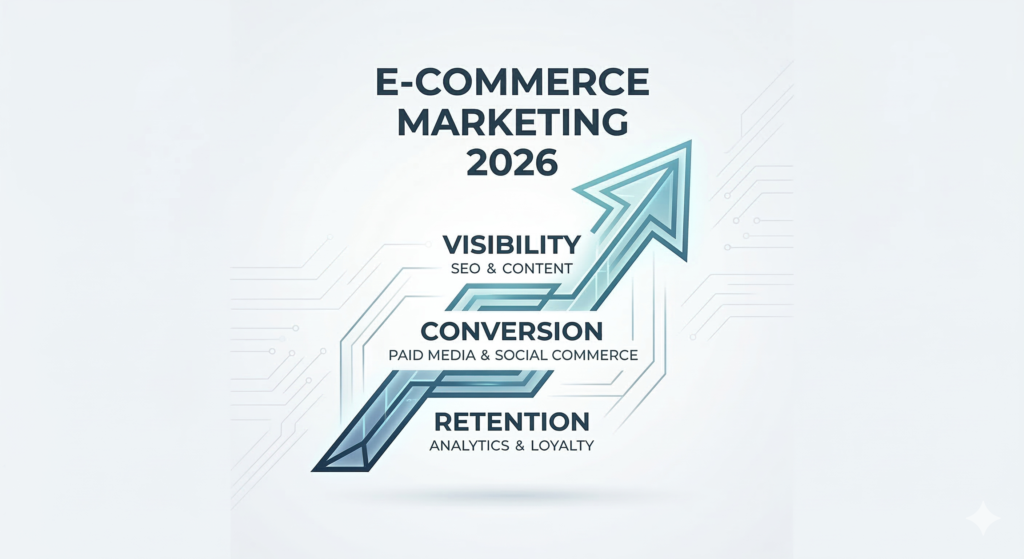
In 2026, e-commerce digital marketing has become far more than running online ads or posting social media content. It’s now a strategic discipline that brings together SEO, content, paid media, product optimisation, customer analytics, personalisation, and even AI-driven experiences to help online stores grow sustainably and profitably. With global e-commerce sales continuing to grow — driven by mobile usage, personalisation, and evolving consumer expectations — businesses must adopt a data-driven and multi-channel approach to thrive this year.
Whether you’re launching a new digital marketing agency or helping clients scale their online stores, this 2026 guide will walk you through the essentials of e-commerce digital marketing and key strategies you need to succeed — especially around search engine optimisation (SEO), paid advertising, social strategies, and conversion optimisation.
What Is E-commerce Digital Marketing in 2026?
E-commerce digital marketing refers to the online strategies and tactics used to drive traffic to an e-commerce store, convert visitors into customers, and retain buyers for long-term revenue growth. It includes a combination of SEO, content marketing, email, paid media, social commerce, and data analytics — all working together to guide shoppers through the entire digital buying journey.
At its core, e-commerce digital marketing aims to:
- Boost visibility in search engines and social channels
- Increase conversion rates on product and checkout pages
- Improve customer retention and lifetime value
- Build brand equity across digital touchpoints
This comprehensive approach ensures that both discovery and conversion are optimised at every stage of the funnel.
The Foundation — E-commerce SEO (Search Engine Optimisation)
SEO remains one of the most critical components of any e-commerce digital marketing strategy in 2026. It helps your website rank organically on search engines like Google and attracts high-intent traffic without the cost of paid ads.
Why SEO Matters More Than Ever
Search behaviour is evolving — with AI-assisted search experiences and voice queries shaping how users find products online. Investing in an SEO strategy ensures your brand appears in traditional search results and in AI-generated results, which are increasingly common.
Key E-commerce SEO Practices
- Technical SEO
Ensure your site loads fast, is mobile-first, and has clean site architecture that makes it easier for search engines to crawl. Structured data like product schema helps search engines understand your product content. - Keyword Research
Focus on transactional and long-tail keywords that reflect purchase intent, such as “best running shoes online” or “SEO for e-commerce store”. - On-Page Content Optimisation
Optimise product titles, descriptions, metadata, and FAQ sections — write content that directly answers user queries to enhance ranking potential. - Content Marketing
Blogs, buying guides, product comparisons, and how-to guides help capture informational search traffic early in the buyer journey. - Link Building
Acquire relevant backlinks from high-authority sites to strengthen domain authority and improve search rankings.
Paid Media Strategies for E-commerce Growth
While SEO builds long-term visibility, paid advertising gives you predictable reach and immediate traffic — essential for new stores and scaling e-commerce brands.
Core Paid Channels
- Google Search & Shopping Ads
Capture users actively searching for products and categories relevant to your brand. - Social Ads (Meta, TikTok, YouTube)
Use eye-catching visuals and video content to build brand awareness, retarget interested users, and drive conversions. - Dynamic Retargeting
Show personalised ads based on user behaviour — such as products viewed but not purchased — to increase conversion probability.
Paid channels are most effective when carefully tracked and optimised. Tracking metrics like ROAS (Return on Ad Spend) and CAC (Customer Acquisition Cost) ensures your campaigns are profitable and sustainable.
Social Commerce & Customer Engagement
Social media platforms have evolved into commerce channels themselves — especially short-form video platforms like TikTok, Instagram Reels, and YouTube Shorts. Users are not just discovering brands there; they’re buying directly from social posts.
Top Social Strategies in 2026
- Live Selling & Shoppable Posts
Integrate product tags and direct checkout experiences within social platforms. - User-Generated Content (UGC)
Encourage customers to create videos and reviews — this drives authenticity and trust. - Influencer & Community Marketing
Engage niche influencers to boost credibility and develop communities around your brand. - Social Proof
Display reviews and testimonials prominently — it builds trust and enhances conversions.
Social channels aren’t just promotional — they’re part of the purchase journey.
Personalisation and AI-Driven Optimisation
One of the biggest shifts in e-commerce digital marketing for 2026 is the role of AI in personalisation and optimisation. AI isn’t just a buzzword — it’s a business necessity.
From predictive product recommendations to personalised email sequences and dynamic pricing, brands using intelligent automation see significantly higher engagement and conversion.
Key AI-Powered Tactics:
- Personalised product recommendations based on browsing history
- AI-generated dynamic landing page content
- Chatbots for real-time customer support and checkout help
- AI-assisted ads optimisation to automatically refine bids and creatives
These tactics not only enhance the customer experience but improve ROI and efficiency across channels.
Conversion Rate Optimisation (CRO)
Driving traffic is only half the battle — turning visitors into buyers is where the real growth happens. Conversion Rate Optimisation (CRO) focuses on improving your store’s user experience to increase sales without necessarily increasing traffic.
Effective CRO Tactics Include:
- Simplified checkout experiences
- Clear call-to-action (CTA) buttons
- Trust badges and secure payment indicators
- Guest checkout options
- Mobile-friendly product pages
Even small improvements in conversion rates can significantly impact revenue — sometimes more than doubling returns from the same traffic volume.
Retention & Lifecycle Marketing
Acquiring new customers is expensive. Smart e-commerce brands focus on customer retention because repeat buyers have higher lifetime value and often cost less to convert.
In 2026, this means:
- Email & SMS automation to keep customers engaged post-purchase
- Loyalty programmes to reward repeat purchases
- Personalised offers that match previous purchase behaviour
A strong retention strategy means each user becomes more valuable over time — boosting profitability.
Tracking, Analytics & Performance Measurement
To succeed in e-commerce digital marketing, you must track and analyze your results.
Use tools like:
- Google Analytics 4 (GA4) for website engagement and conversions
- E-commerce platform insights (e.g., Shopify analytics)
- Social and ad platform performance dashboards
- Attribution tools to understand cross-channel impact
Metrics that matter include:
- Conversion Rate
- Average Order Value (AOV)
- Customer Acquisition Cost (CAC)
- Return on Ad Spend (ROAS)
- Customer Lifetime Value (CLV)
Without measurement, you can’t optimise.
Future-Ready E-commerce SEO: AEO and Conversational Search
Search in 2026 is evolving with AI tools and conversational experiences shaping how users find products. Answer Engine Optimisation (AEO) focuses on structuring content to appear in AI-generated responses and voice search results as well as traditional SERPs — blending SEO with future search formats.
This means brands must create:
- Natural, conversational content
- FAQ sections optimised for intent
- Structured data (schema markup)
- Content that answers queries precisely
By preparing for both traditional SEO and AEO, you future-proof visibility across search formats.
Conclusion: A Holistic Strategy for Sustainable Growth
In 2026, e-commerce digital marketing is more comprehensive and data-driven than ever before. A successful strategy combines:
- SEO for organic discovery
- Paid channels for predictable traffic
- Social commerce for engagement and sales
- AI personalisation for individualized experiences
- CRO and retention tactics for long-term profitability
By embracing a multi-channel, analytic, and customer-centric approach, e-commerce brands can stay competitive and grow in this dynamic digital landscape — transforming visitors into loyal customers and delivering measurable results.