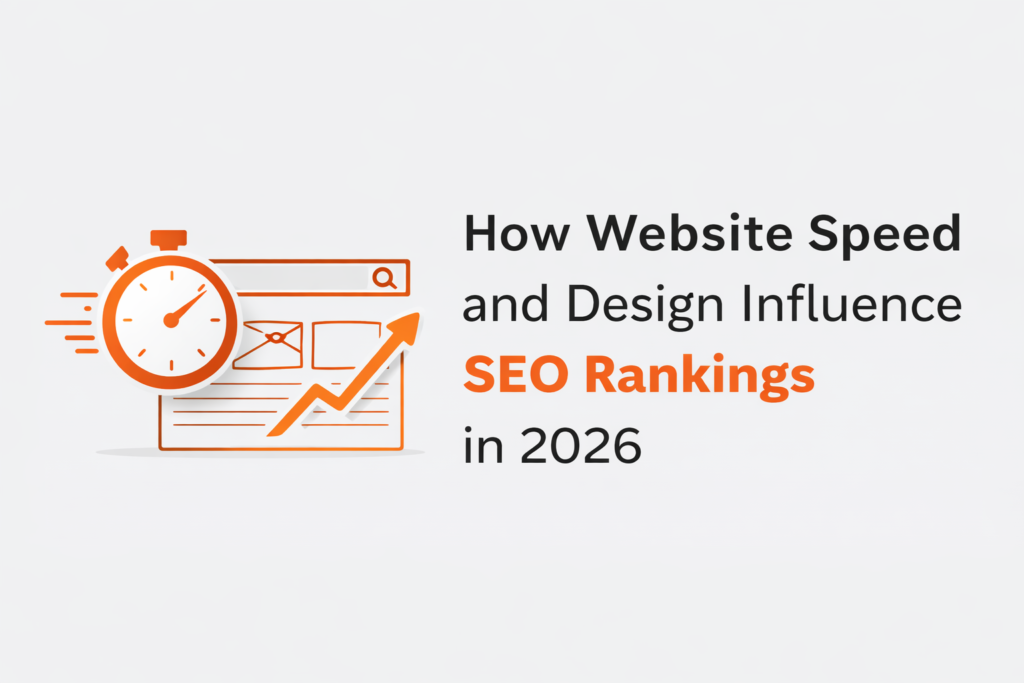
In 2026, ranking well on search engines is no longer just about keywords and backlinks. If your website is slow or poorly designed, your chances of appearing on the first page are slim—no matter how good your content is.
Search engines have become far more user-focused. They now prioritise websites that deliver fast, seamless, and visually engaging experiences. So, if you want to stay competitive, understanding how website speed and design influence SEO rankings is essential. Let’s break it down in a practical, no-nonsense way.
Why Website Speed Matters More Than Ever
Website speed has been a ranking factor for years, but in 2026, it’s critical. Users expect pages to load almost instantly. If your site takes longer than a few seconds, they’ll leave—and search engines take note.
The SEO Impact of Slow Loading Times
A slow website can hurt your SEO in several ways:
- Higher bounce rates
- Lower user engagement
- Reduced crawl efficiency
- Poor Core Web Vitals scores
Search engines interpret these signals as a poor user experience, which can push your rankings down.”Core Web Vitals explained“.
What’s Considered “Fast” in 2026?
Today’s benchmarks are stricter than ever:
- Load time under 2 seconds
- First Contentful Paint (FCP) under 1.5 seconds
- Smooth interaction with minimal delays
Anything slower puts you at a disadvantage.
How Website Design Affects SEO Rankings
Design isn’t just about aesthetics—it’s about usability. A well-designed site helps users find what they need quickly, which improves engagement and SEO performance.
Key Design Elements That Influence SEO
1. Mobile-First Design
With mobile traffic dominating, search engines prioritise mobile-friendly websites.
If your site isn’t optimised for smaller screens, you risk losing both users and rankings.
2. Clear Navigation
Users should be able to find information within seconds. Confusing layouts lead to frustration and higher exit rates.
3. Visual Hierarchy
Proper use of headings, spacing, and visuals helps users scan content easily—something search engines reward. “How to improve website user experience” → UX optimisation guide]
The Connection Between Speed, Design, and User Experience
Speed and design work together to create a strong user experience (UX). And in 2026, UX is a major ranking factor.
Search engines analyse how users interact with your site:
- Do they stay or leave quickly?
- Do they click through multiple pages?
- Do they engage with your content?
A fast, well-designed site encourages users to stay longer and explore more.
Why UX Signals Matter for SEO
Good UX leads to:
- Longer dwell time
- Lower bounce rates
- Higher conversion rates
These signals indicate quality, which boosts your SEO rankings.
Core Web Vitals and Design Performance
Core Web Vitals remain a key part of Google’s ranking algorithm in 2026. They measure real-world user experience based on speed and interactivity.
The Three Key Metrics
- Largest Contentful Paint (LCP): How quickly the main content loads
- Interaction to Next Paint (INP): How responsive your site is
- Cumulative Layout Shift (CLS): Visual stability during loading
A poorly designed site with shifting elements or delayed responses will struggle to rank well.
Practical Tips to Improve Speed and Design
You don’t need a complete overhaul to see improvements. Small, strategic changes can make a big difference.
Speed Optimisation Tips
- Compress images without losing quality
- Use a reliable hosting provider
- Enable browser caching
- Minimise unnecessary scripts
Design Improvements
- Use clean, simple layouts
- Prioritise readability (fonts, spacing, contrast)
- Ensure mobile responsiveness
- Avoid clutter and distractions “technical SEO checklist for beginners” → technical SEO guide]
Comparing Fast vs Slow Websites
Let’s look at the difference:
Fast, Well-Designed Website
- Loads quickly
- Easy to navigate
- Mobile-friendly
- Keeps users engaged
Slow, Poorly Designed Website
- Long loading times
- Confusing layout
- High bounce rate
- Low search visibility
The difference in SEO performance between the two can be massive.
Trends Shaping Website Speed and Design in 2026
To stay ahead, it’s important to understand current trends:
1. AI-Driven Design
Websites are increasingly using AI to personalise layouts and content for users, improving engagement.
2. Lightweight Frameworks
Modern frameworks focus on speed and efficiency, reducing load times significantly.
3. Minimalist Design
Clean, distraction-free designs are dominating because they improve usability and performance.
4. Voice and Accessibility Optimisation
Designs are now more inclusive, supporting voice navigation and accessibility standards. “Future of web design trends”
Common Mistakes to Avoid
Even well-meaning website owners make mistakes that hurt SEO:
- Overloading pages with heavy images or animations
- Ignoring mobile optimisation
- Using outdated design structures
- Neglecting performance testing
Avoiding these pitfalls can give you a strong competitive edge.
Final Thoughts
In 2026, website speed and design are no longer optional—they are essential for SEO success. A fast, user-friendly website not only improves rankings but also enhances the overall user experience.
If your site feels slow or outdated, now is the time to act. Start with small improvements, focus on user needs, and continuously optimise your performance.
Because in today’s digital landscape, the websites that win are the ones that load fast, look great, and deliver value instantly.