
Search Engine optimisation (SEO) is the process of improving a website so that it appears higher in search engine results pages (SERPs). When people search for information, products, or services on search engines, they usually click on the first few results they see. SEO helps websites rank higher so they can attract more visitors organically, without paying for advertisements.
SEO is essential for businesses, bloggers, and website owners who want to increase visibility, drive traffic, and grow their online presence. To understand how SEO works, it’s important to explore the main pillars of SEO, how search engines function, and the strategies and tools used by SEO professionals.
What Are the Three Pillars of SEO?
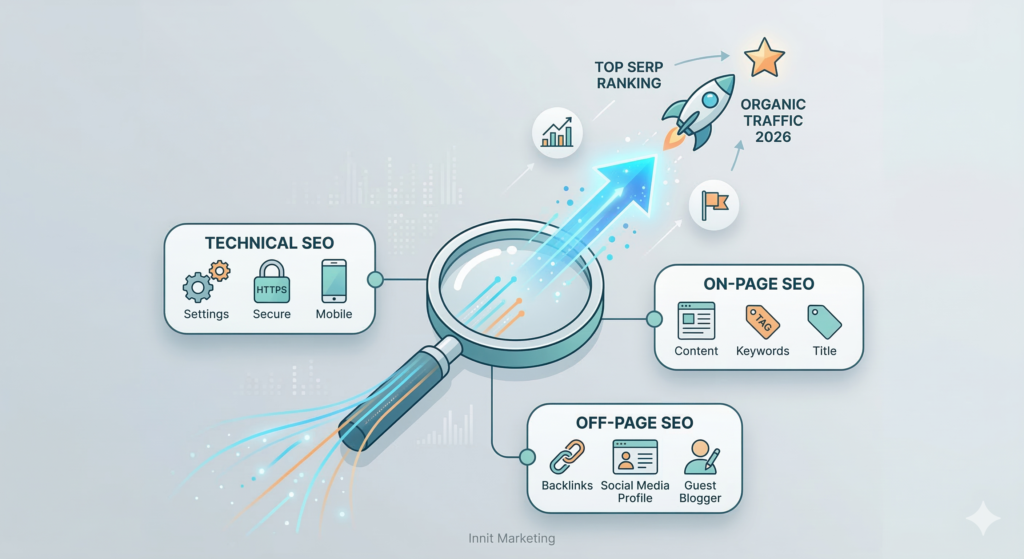
SEO is built on three fundamental pillars: Technical SEO, On-Page SEO, and Off-Page SEO. These three elements work together to improve a website’s visibility and performance in search results.
Technical SEO
Technical SEO focuses on optimizing the technical aspects of a website so search engines can easily crawl, index, and understand its content. Even if your content is excellent, poor technical structure can prevent search engines from ranking your pages.
Some key elements of technical SEO include:
- Website speed: Fast-loading websites provide better user experience and are favored by search engines.
- Mobile friendliness: Websites must work well on mobile devices since most users search on their phones.
- Secure connection (HTTPS): Security is a ranking factor for search engines.
- Site structure and navigation: A clear structure helps search engines crawl pages efficiently.
- XML sitemaps: These help search engines discover and index your pages.
- Fixing crawl errors and broken links
A technically optimised website ensures that search engines can access and understand the site’s content without issues.
On-Page SEO
On-Page SEO involves optimizing the content and HTML elements on individual pages to make them more relevant for specific keywords.
Important on-page SEO factors include:
- Keyword research and usage: Identifying the words people search for and including them naturally in the content.
- Title tags and meta descriptions: These help search engines understand what the page is about and influence click-through rates.
- Header tags (H1, H2, H3): Organizing content with headings improves readability and SEO.
- Internal linking: Linking to other pages within the same website helps search engines understand the site structure.
- Image optimisation: Using descriptive alt text and compressed images improves both accessibility and speed.
- High-quality content: Search engines prioritize content that provides real value to users.
On-page SEO ensures that both users and search engines clearly understand the content and purpose of each page.
Off-Page SEO
Off-Page SEO refers to activities performed outside your website that improve its authority and credibility.
The most important factor in off-page SEO is backlinks—links from other websites pointing to your site. When reputable websites link to your content, search engines interpret it as a sign of trust and authority.
Common off-page SEO techniques include:
- Link building
- Guest blogging
- Social media promotion
- Influencer outreach
- Brand mentions
The more high-quality backlinks a website earns, the more authority it gains in the eyes of search engines.
How Do Search Engines Actually Work?
Search engines follow three main steps to deliver search results: crawling, indexing, and ranking.
Crawling is the process where search engine bots (also called spiders) scan the internet and discover new or updated pages. These bots follow links from one page to another to find content.
Indexing happens after a page is crawled. The search engine stores and organizes the page’s information in a massive database called the index. If a page is not indexed, it cannot appear in search results.
Ranking is the process where search engines determine the order of results for a search query. They use complex algorithms that consider hundreds of ranking factors such as relevance, content quality, backlinks, user experience, and page speed.
The goal of search engines is to provide the most helpful and relevant results to users as quickly as possible.
What Is an SEO Strategy?
An SEO strategy is a structured plan designed to improve a website’s visibility in search engines and drive consistent organic traffic.
A strong SEO strategy usually includes:
- Keyword research: Finding search terms your audience is using.
- Content creation: Producing high-quality articles, guides, and resources targeting those keywords.
- Technical improvements: Ensuring the website performs well technically.
- Link building: Increasing domain authority through backlinks.
- Performance tracking: Monitoring rankings and traffic to adjust strategies.
SEO is not a one-time activity. It is a long-term process that requires continuous optimisation and analysis to stay competitive.
What Skills Do You Need to Become an SEO Specialist?
To become a successful SEO specialist, several skills are important. SEO combines technical knowledge, analytical thinking, and creativity.
Key skills include:
- Keyword research and analysis
- Content writing and optimisation
- Basic HTML and technical SEO knowledge
- Data analysis and interpretation
- Link building strategies
- Understanding search engine algorithms
- Problem-solving and critical thinking
SEO professionals also need to stay updated because search engine algorithms frequently change.
What Are the Best SEO Tools?
SEO professionals rely on various tools to analyze websites, track rankings, research keywords, and improve performance.
Some of the most popular SEO tools include:
- Google Analytics: Tracks website traffic and user behaviour.
- Google Search Console: Helps monitor website performance in search results and detect technical issues.
- Ahrefs: A powerful tool for backlink analysis and keyword research.
- SEMrush: Provides keyword research, site audits, and competitor analysis.
- Moz: Offers SEO metrics, keyword tracking, and optimisation insights.
- Screaming Frog: A website crawler used for technical SEO audits.
These tools help SEO professionals make data-driven decisions and improve website performance efficiently.
Conclusion
SEO is a powerful digital marketing strategy that helps websites increase visibility and attract organic traffic from search engines. By understanding the three pillars of SEO—Technical, On-Page, and Off-Page—businesses can build a strong foundation for higher search rankings.
When combined with a clear SEO strategy, the right skills, and effective tools, SEO becomes an essential component of long-term online success. While it requires time and consistent effort, the benefits of SEO can provide sustainable growth and a steady stream of visitors to any website.
Innit Marketing provides expert digital marketing solutions designed to help businesses grow online.
From SEO and content marketing to website optimisation and performance strategies, Innit Marketing offers complete digital marketing services tailored to your business goals.