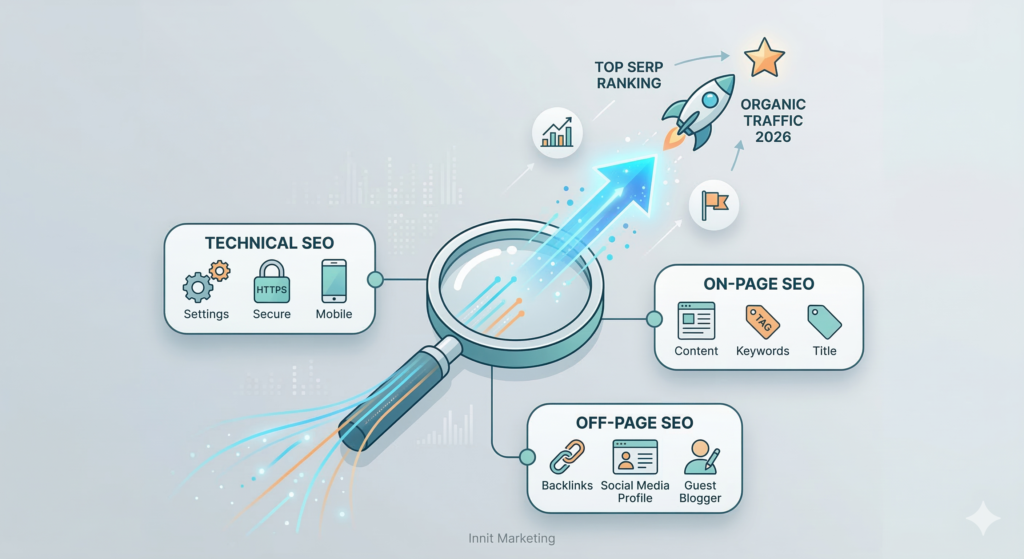

In the ever-evolving digital landscape, simply publishing high-quality content is not enough to achieve strong search engine rankings. Websites must also be technically optimised to ensure that search engines can efficiently crawl, index, and understand their pages. This is where technical SEO plays a critical role.
Technical SEO refers to the process of optimizing a website’s infrastructure so that search engines like Google and Bing can easily access, interpret, and rank its content. While on-page SEO focuses on content and keywords, and off-page SEO focuses on backlinks, technical SEO ensures that the website itself functions properly for both users and search engines.
Understanding the basics and implementing the right strategies can significantly improve website performance, search visibility, and user experience.
Understanding Technical SEO
Technical SEO involves optimizing the backend structure and performance of a website. It ensures that search engine bots can crawl your website efficiently and index important pages without issues.
If a website has slow loading speeds, broken links, duplicate pages, or poor mobile optimisation, search engines may struggle to evaluate the content properly. Even the best content can fail to rank if the technical foundation of the website is weak.
This is why businesses, bloggers, and digital marketers increasingly focus on improving website architecture, page speed, and crawlability.
Why Technical SEO Matters
Search engines use complex algorithms to determine which websites should appear in search results. These algorithms consider hundreds of ranking factors, many of which are related to technical performance.
A well-optimised website provides several benefits:
- Faster loading pages
- Better user experience
- Higher crawl efficiency
- Improved indexing of content
- Increased chances of ranking higher in search results
Modern search engines prioritize websites that deliver fast, secure, and mobile-friendly experiences. Technical SEO ensures that your site meets these expectations.
Key Elements of Technical SEO
To build a strong technical SEO foundation, several factors need attention.
1. Website Speed and Performance
Page speed is one of the most important ranking signals. Users expect websites to load quickly, especially on mobile devices. Slow websites increase bounce rates and reduce engagement.
Tools like Google PageSpeed Insights and GTmetrix help analyze website performance and identify areas for improvement.
Some common ways to improve website speed include:
- Compressing images
- Enabling browser caching
- Reducing unnecessary scripts
- Using fast hosting infrastructure
- Implementing content delivery networks
Improving loading speed can have a direct impact on both SEO rankings and user satisfaction.
2. Mobile-Friendliness
With the majority of internet traffic coming from smartphones, mobile optimisation has become essential. Search engines now use mobile-first indexing, meaning they primarily evaluate the mobile version of a website.
A mobile-friendly website should feature:
- Responsive design
- Easy navigation
- Readable text without zooming
- Properly sized images and buttons
Websites that perform well on mobile devices tend to rank better and provide a smoother user experience.
3. Crawlability and Indexing
Search engines rely on bots to discover and analyze webpages. If these bots cannot crawl your site properly, your pages may never appear in search results.
Technical SEO helps ensure smooth crawling by optimizing files such as:
- XML sitemaps
- robots.txt files
- internal linking structure
Submitting sitemaps through tools like Google Search Console helps search engines understand the structure of your website and locate important pages faster.
4. Secure Websites (HTTPS)
Website security is another crucial factor in technical SEO. Secure websites use HTTPS encryption to protect user data.
Search engines prefer secure websites because they offer safer browsing experiences. Most modern browsers also warn users when visiting non-secure sites, which can reduce trust and traffic.
Implementing SSL certificates ensures your website remains secure and credible.
5. Structured Data and Schema Markup
Structured data helps search engines better understand the context of your content. By using schema markup, websites can provide additional details about their pages.
This can lead to enhanced search results such as:
- Rich snippets
- star ratings
- FAQs
- product details
These enhanced results often improve click-through rates and visibility in search engine results pages.
6. Fixing Broken Links and Errors
Technical SEO also involves identifying and resolving issues such as:
- 404 errors
- redirect chains
- duplicate pages
- broken internal links
These issues can negatively affect both user experience and crawl efficiency.
Regular website audits help detect such problems early and maintain optimal performance.
Emerging Technical SEO Trends
As search engines evolve, technical SEO continues to adapt to new technologies and user behaviours.
One major trend is the increased importance of Core Web Vitals, a set of metrics that measure real-world user experience. These metrics focus on loading speed, visual stability, and interactivity.
Another growing trend is the use of AI-powered search algorithms, which require websites to deliver clear structure and high-quality technical performance.
Voice search optimisation, faster hosting solutions, and progressive web apps are also becoming increasingly relevant in modern SEO strategies.
Final Thoughts
Technical SEO forms the backbone of a successful website. Without a strong technical foundation, even the most valuable content may struggle to gain visibility in search results.
By focusing on website speed, mobile optimisation, crawlability, structured data, and security, businesses can improve their online presence and deliver better experiences to users.
Investing in technical SEO today ensures long-term website performance, stronger search rankings, and sustainable digital growth.
Innit Marketing provides expert digital marketing solutions designed to help businesses grow online.
From SEO and content marketing to website optimisation and performance strategies, Innit Marketing offers complete digital marketing services tailored to your business goals.