Introduction
Search Engine Optimisation (SEO) in 2026 is more competitive and fast-moving than ever. With frequent algorithm updates, AI-driven search results, and changing user behaviour, businesses must adopt a smarter, data-led approach to remain visible online.
If you’re new to Search Engine Optimisation (SEO), this beginner-friendly guide will help you understand how it works, why it matters, and how to use it to grow your business.
What Is SEO?
SEO (Search Engine Optimisation) is the process of improving your website’s visibility on search engines like Google to attract organic (non-paid) traffic.
In simple terms, SEO helps your website appear when potential customers search for products or services related to your business.
Why SEO Matters in 2026
SEO is no longer just about keywords — it’s about user intent, experience, and authority.
Key Benefits of SEO
- Increases organic website traffic
- Builds trust and credibility
- Delivers long-term results
- Reduces dependence on paid advertising
- Improves overall user experience
Discover how this fits into a complete strategy with our Search Dominance services
How Search Engines Work
Search engines such as Google follow three main steps:
1. Crawling
Search engines scan your website to discover content.
2. Indexing
Your pages are stored and organised in a database.
3. Ranking
Content is ranked based on relevance, quality, and user experience.
Types of SEO You Need to Know
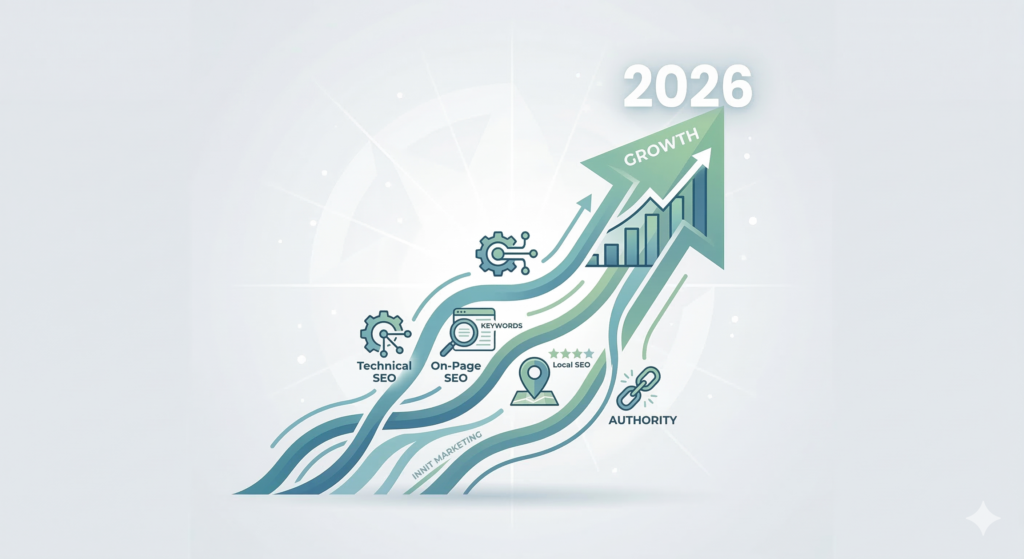
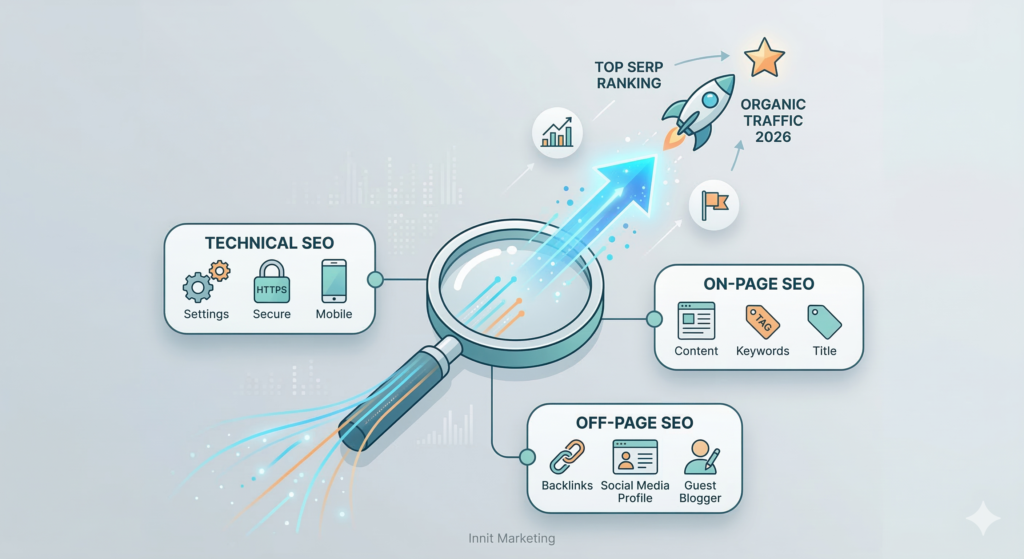
1. On-Page SEO
Focuses on optimising elements within your website.
Includes:
- Keyword optimisation
- Meta titles and descriptions
- Content structure
- Internal linking
Improve your content with our On-Page SEO services
2. Off-Page SEO
Refers to actions taken outside your website.
Includes:
- Backlink building
- Brand mentions
- Authority development
Build authority with our Off-Page SEO strategies
3. Technical SEO
Ensures your website is easy for search engines to crawl and index.
Includes:
- Site speed optimisation
- Mobile responsiveness
- Structured site architecture
4. Local SEO
Essential for businesses targeting local customers.
Includes:
- Google Business Profile optimisation
- Local keyword targeting
- Customer reviews
Key SEO Ranking Factors in 2026
1. User Experience (UX)
- Fast-loading pages
- Mobile-friendly design
- Clear navigation
2. High-Quality Content
Content should be:
- Relevant
- Informative
- Well-structured
3. Backlinks & Authority
High-quality backlinks signal trust and credibility to search engines.
4. Search Intent
Understanding what users are actually searching for is essential to ranking well.
5. AI and Search Evolution
Search engines now use AI to:
- Interpret user intent
- Rank more relevant content
- Deliver personalised results
SEO vs Paid Ads: Which Is Better?
Both SEO and paid advertising are important parts of a digital strategy.
SEO
- Long-term growth
- Cost-effective
- Builds authority
Paid Ads
- Immediate visibility
- Scalable campaigns
- Requires ongoing investment
Common SEO Mistakes to Avoid
- Keyword stuffing
- Ignoring mobile optimisation
- Poor website structure
- Weak internal linking
- Duplicate or low-quality content
How to Get Started with SEO
Step 1: Keyword Research
Identify what your audience is searching for.
Step 2: Optimise Your Website
Focus on:
- Content quality
- Technical performance
- Site structure
Step 3: Build Authority
Earn backlinks and strengthen your online presence.
Step 4: Track Performance
Monitor:
- Traffic
- Rankings
- Conversions
The Role of E-Commerce SEO
If you sell products online, SEO is essential for visibility across platforms such as:
- Shopify
- Amazon
- eBay
SEO and Social Media
Social media enhances SEO by:
- Driving traffic to your website
- Increasing brand awareness
- Boosting engagement
Why Work with an SEO Agency
Partnering with professionals allows you to:
- Save time and resources
- Avoid costly mistakes
- Achieve faster, measurable results
If you’re searching for the best digital marketing company, choosing the right SEO partner can significantly impact your success.
Conclusion
SEO in 2026 is about more than rankings — it’s about delivering value, enhancing user experience, and building long-term authority.
By understanding the fundamentals and applying the right strategies, you can create sustainable growth for your business.