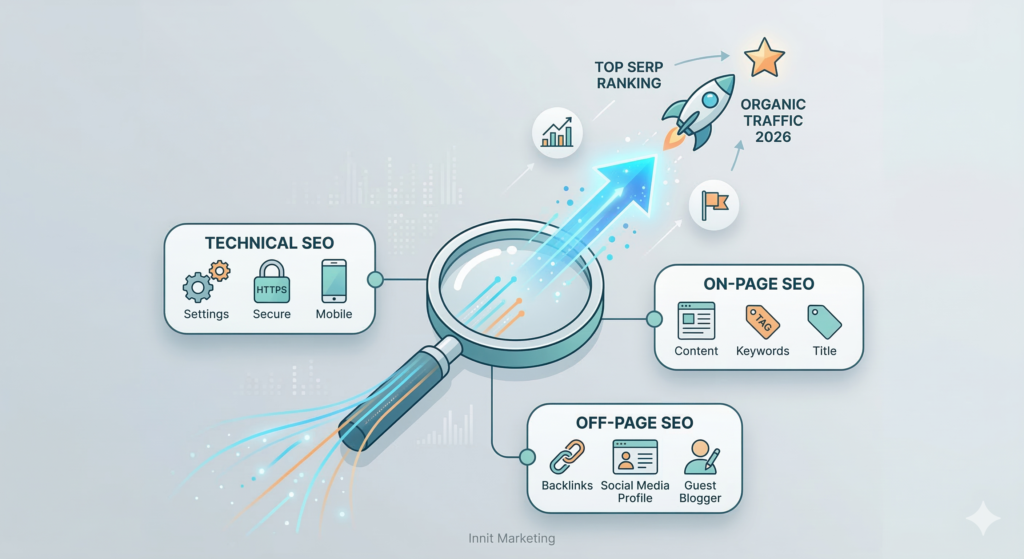
In today’s digital world, simply having a website is not enough—especially for local businesses. If you want people in your area to find you quickly and easily, Local SEO is essential. Whether you run a café, a retail shop, or a service-based business, understanding how Local SEO works can make a real difference to your visibility and growth.
This beginner-friendly guide explains what Local SEO is, how it works, and why it matters in 2026.
What Is Local SEO?
Local SEO (Search Engine Optimisation) is a strategy that helps your business appear in search results when people look for products or services in a specific location.
For example, when someone searches for “coffee shop near me” or “best plumber in Coventry”, search engines like Google use Local SEO signals to show the most relevant businesses nearby.
Unlike general SEO, which focuses on global or national visibility, Local SEO targets a specific geographic area. This makes it especially valuable for small and medium-sized businesses.
Why Local SEO Matters for Businesses
Local SEO is more important than ever in 2026, as more people rely on mobile searches and voice assistants to find nearby services.
Here’s why it matters:
- Higher visibility in local searches
- More foot traffic to your business
- Better quality leads from nearby customers
- Increased trust through reviews and ratings
When your business appears in local search results—especially in the “map pack” on Google—it significantly increases your chances of attracting customers.
How Local SEO Works
Local SEO works by helping search engines understand your business location, relevance, and credibility. It uses a combination of factors to determine where your business should appear in local search results.
Google Business Profile Optimisation
One of the most important elements of Local SEO is your Google Business Profile (formerly Google My Business).
This is the listing that appears when people search for your business or services nearby. A well-optimised profile includes:
- Accurate business name, address, and phone number
- Opening hours
- Photos of your business
- Customer reviews
Keeping this information updated helps improve your chances of appearing in local search results.
Local Keywords and Content
Using the right keywords is another key part of Local SEO. These are phrases people use when searching for services in a specific area, such as:
- “best restaurant in Coventry”
- “local electrician near me”
- “hairdresser in the West Midlands”
By including these keywords naturally in your website content, blog posts, and page titles, you make it easier for search engines to match your business with relevant searches.
Online Reviews and Reputation
Customer reviews play a major role in Local SEO. Positive reviews not only build trust with potential customers but also signal to search engines that your business is reliable.
Encouraging satisfied customers to leave reviews on platforms like Google Maps can improve your rankings and visibility.
Responding to reviews—both positive and negative—also shows that you value customer feedback, which can enhance your reputation.
Local Citations and Listings
Local citations are mentions of your business on other websites, such as directories and listings. These include your business name, address, and phone number.
Consistency is key. Your details should match across all platforms to avoid confusion and improve trust with search engines.
Popular directories include:
- Online business listings
- Local directories
- Industry-specific platforms
The more consistent and accurate your information, the better your Local SEO performance.
Mobile and Voice Search Optimisation
With the rise of smartphones and voice assistants, Local SEO has become closely linked to mobile search behaviour.
People now use voice commands like “find a takeaway near me” or “nearest gym open now”. To stay competitive, your website should be:
- Mobile-friendly
- Fast-loading
- Easy to navigate
Optimising for these factors ensures that your business remains accessible to modern users.
Tips to Improve Your Local SEO
If you’re just starting out, here are some simple steps to improve your Local SEO:
- Claim and optimise your Google Business Profile
- Use local keywords naturally in your content
- Encourage and manage customer reviews
- Ensure your business details are consistent online
- Create location-based blog content
These steps can help you build a strong local presence over time.
Common Mistakes to Avoid
While Local SEO is powerful, there are some common mistakes beginners should avoid:
- Ignoring customer reviews
- Using outdated or incorrect business information
- Keyword stuffing instead of natural writing
- Not optimising for mobile users
Avoiding these pitfalls can save time and improve your results.
Final Thoughts
Local SEO is one of the most effective ways to grow your business in your local area. It helps you connect with customers who are actively searching for your products or services.
By focusing on key elements such as your Google Business Profile, local keywords, and customer reviews, you can improve your visibility and attract more customers.
In 2026, as digital habits continue to evolve, investing in Local SEO is no longer optional—it’s essential. With the right approach, even small businesses can compete effectively and stand out in their local market.
From SEO and content marketing to website optimisation and performance strategies, Innit Marketing offers complete digital marketing services tailored to your business goals.