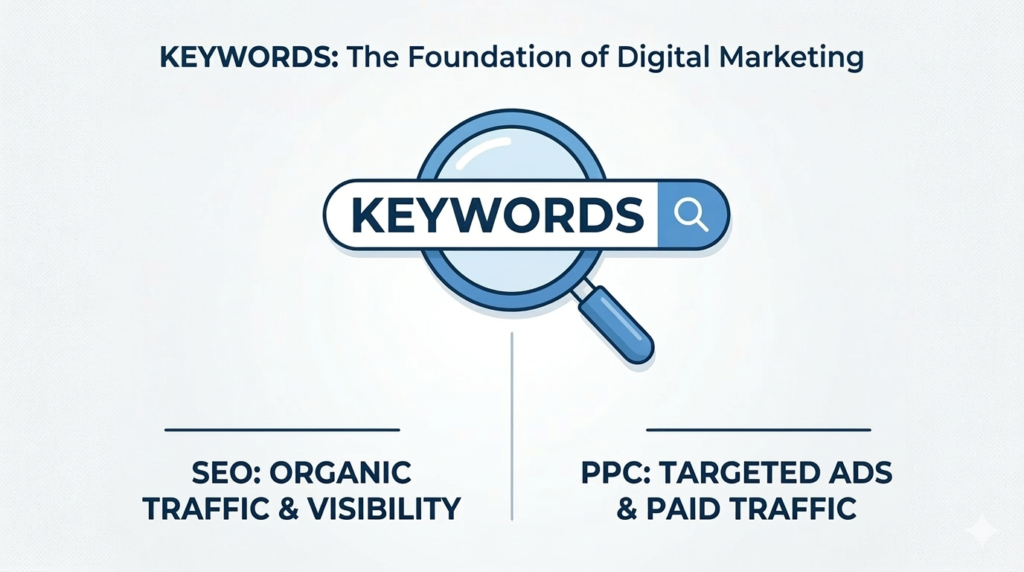
In the world of digital marketing, keywords are one of the most important elements for improving online visibility. Whether you are running a blog, an e-commerce store, or a business website, understanding keywords helps you connect with the right audience. Keywords form the foundation of both Search Engine Optimisation (SEO) and Pay-Per-Click (PPC) advertising strategies.
This article explains what keywords are, how they work, and why they play a vital role in modern SEO and PPC campaigns.
What Are Keywords?
A keyword is a word or phrase that users type into search engines like Google when looking for information, products, or services. These search terms help search engines understand what a webpage is about and determine whether it should appear in search results.
For example, if someone searches for “best SEO tools for beginners”, that phrase becomes the keyword that search engines use to find relevant content.
In SEO, website owners optimise their content around these keywords so that search engines can match their pages with user queries. In PPC advertising, businesses bid on specific keywords so their ads appear when users search for those terms.
In simple terms, keywords act as a bridge between what people search for and the content you provide.
Why Keywords Matter in SEO
Keywords are crucial in SEO because they help search engines understand the topic and relevance of your content. When used correctly, they can significantly improve a website’s ranking on search engine results pages (SERPs).
1. Improve Search Engine Visibility
Search engines analyse keywords within content, titles, headings, and URLs to determine what a webpage is about. When the right keywords are used naturally, the page is more likely to appear for relevant searches.
2. Connect With User Intent
Keywords reveal the intent behind a search query. For example:
- “What is SEO?” – informational intent
- “Best SEO tools” – commercial intent
- “Buy SEO course online” – transactional intent
Understanding search intent allows marketers to create content that directly answers users’ questions and needs.
3. Drive Targeted Traffic
By targeting specific keywords related to your niche, you attract visitors who are already interested in your topic, service, or product. This leads to higher engagement and better conversion rates.
4. Guide Content Strategy
Keyword research helps businesses identify what topics people are searching for. Many SEO professionals begin their strategy by analysing search volume, competition, and keyword trends before creating content.
The Role of Keywords in PPC Advertising
While keywords are essential for organic SEO, they are equally important in PPC advertising campaigns.
In PPC models, advertisers bid on keywords so their ads appear in search results. They pay only when a user clicks on the ad, making it a measurable and cost-effective marketing strategy.
How Keywords Work in PPC
- Keyword Selection – Choosing relevant search terms for ads.
- Bidding Strategy – Advertisers bid on keywords based on competition.
- Ad Placement – Ads appear when users search for those keywords.
- Performance Tracking – Marketers analyse clicks, conversions, and ROI.
Another important concept in PPC is negative keywords, which prevent ads from appearing for irrelevant searches. For example, a hotel business may exclude the keyword “jobs” to avoid showing ads to job seekers.
Types of Keywords in SEO and PPC
Understanding different types of keywords helps marketers build a more effective search strategy.
1. Short-Tail Keywords
Short-tail keywords contain one or two words, such as “SEO” or “digital marketing”. They usually have high search volume but are highly competitive.
2. Long-Tail Keywords
Long-tail keywords are longer phrases such as “best SEO tools for small businesses”. They may have lower search volume but often bring more targeted traffic and higher conversions.
3. Trending Keywords
Trending keywords are terms that suddenly gain popularity due to events, product launches, or seasonal demand. Using trending keywords can bring significant traffic to a website.
4. Branded Keywords
These keywords include a company or product name, such as “Nike running shoes”.
5. Informational Keywords
Used when users want to learn something, for example “how SEO works”.
Modern Keyword Trends in 2025
SEO is constantly evolving, and keyword strategies have also changed in recent years. Modern search engines use advanced algorithms and artificial intelligence to understand context and meaning rather than relying solely on exact keyword matches.
1. Semantic Search
Search engines now analyse context, synonyms, and related terms to understand content better. Overusing keywords (known as keyword stuffing) can harm rankings rather than improve them.
2. Voice Search and Conversational Queries
With the rise of voice assistants, users are searching with longer and more conversational phrases. This has increased the importance of long-tail keywords.
3. Keyword Clustering
SEO experts now group related keywords into clusters and create comprehensive content around them. This approach helps search engines understand the broader topic of a webpage.
4. AI-Driven Search
Artificial intelligence is transforming search engines, meaning marketers must focus more on user intent, topical authority, and high-quality content rather than repeating keywords.
Best Practices for Using Keywords
To get the best results from your keyword strategy, follow these proven SEO practices:
- Conduct thorough keyword research before creating content.
- Use keywords naturally in titles, headings, and meta descriptions.
- Focus on user intent rather than keyword repetition.
- Target long-tail keywords for better conversions.
- Regularly update content based on keyword trends.
Avoid outdated practices like keyword stuffing, as search engines now prioritise content quality and relevance.
Conclusion
Keywords remain the backbone of both SEO and PPC marketing strategies. They help search engines understand your content and connect it with the right audience. By researching the right keywords, understanding search intent, and using modern strategies like keyword clustering and long-tail targeting, businesses can significantly improve their online visibility.
In today’s evolving digital landscape, successful marketers no longer rely solely on keywords but combine them with high-quality content, user intent, and smart data analysis. When used effectively, keywords can drive targeted traffic, increase conversions, and help your website achieve long-term success.
Innit Marketing provides expert digital marketing solutions designed to help businesses grow online.
From SEO and content marketing to website optimisation and performance strategies, Innit Marketing offers complete digital marketing services tailored to your business goals.